ForceBeyond Logo
industry-aerospace-turbine-engine

Inconel 625 Casting Services: Co-Owned Foundries in USA, South Korea & Taiwan

Inconel 625 Casting Key Facts: Inconel 625 (UNS N06625) is a nickel-chromium-molybdenum-niobium alloy valued for resistance to pitting, crevice corrosion, and many chloride-containing environments. Vacuum investment castings may be produced to applicable specifications such as AMS 5401. ForceBeyond supports VIM for applicable casting routes, HIP where required, heat treatment, NDT, and precision machining. Published property data extend across cryogenic and elevated-temperature conditions, while actual allowable service conditions depend on material condition, geometry, loading, environment, code requirements, and the governing specification.

Inconel 625 Casting: Corrosion-Resistant Solutions for Nuclear & Marine

ForceBeyond is a premier Inconel 625 casting supplier with co-owned foundries in the USA, South Korea, and Taiwan. We support Vacuum Induction Melting (VIM) for applicable casting routes and Hot Isostatic Pressing (HIP) where required to control internal porosity. Our manufacturing model coordinates engineering and quality oversight across the network for marine, subsea oil and gas, chemical-processing, and selected Nuclear / SMR programs where the alloy and casting route are permitted by the applicable code, specification, qualification plan, and customer requirements. Learn more about our advanced VIM and quality control processes on our Superalloy Casting Services hub.

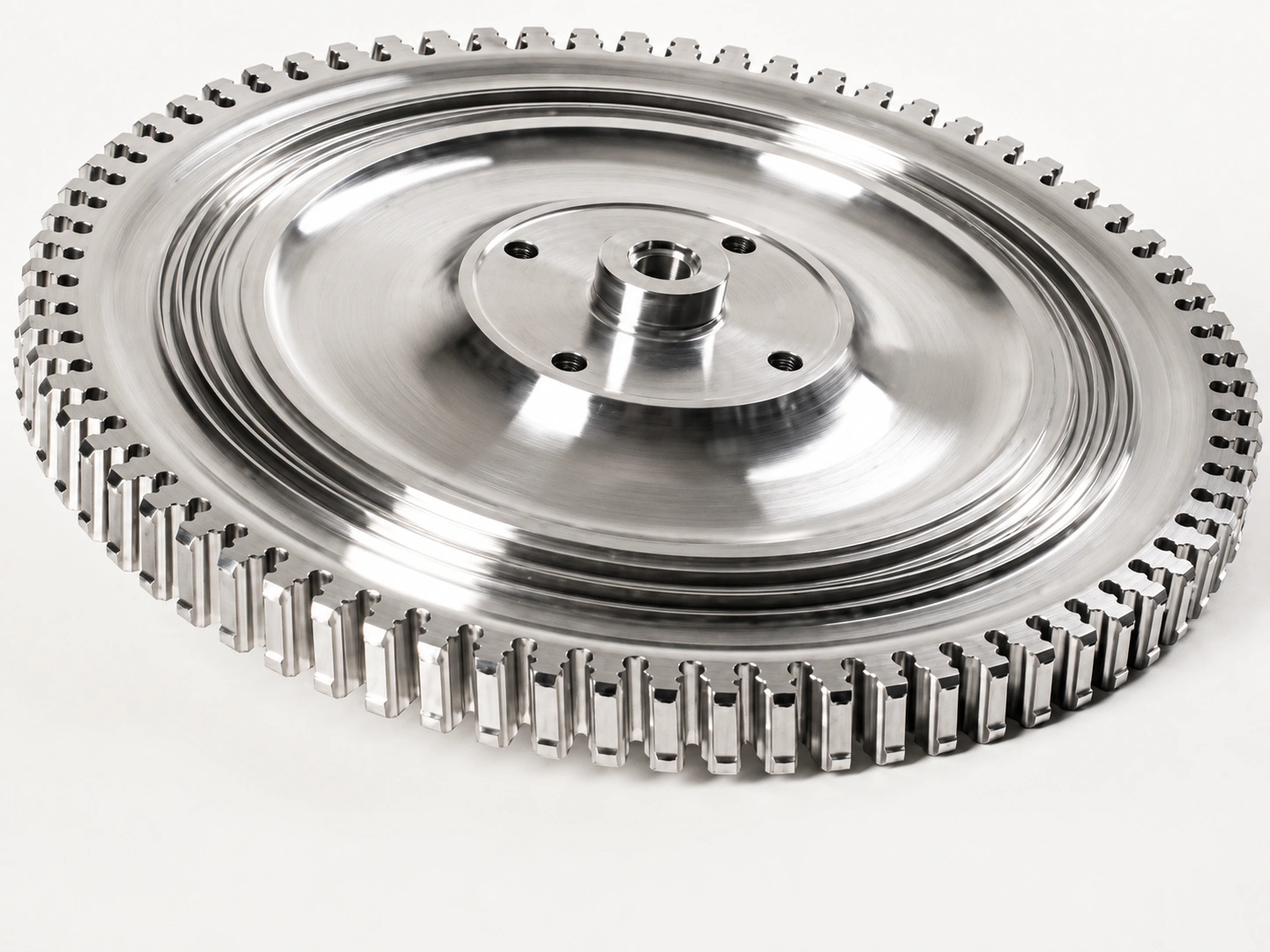
Inconel-625-gas-turbine-disc-via-VIM-at-ForceBeyond-co-owned-foundry-for-aerospace-power-generation

Inconel 625 Casting Properties vs. Inconel 718

Selecting the correct superalloy is critical for component longevity. While Inconel 718 Casting is the preferred choice for high-temperature mechanical strength and creep resistance, Inconel 625 is selected for its superior resistance to pitting, crevice corrosion, and chloride-ion stress-corrosion cracking.

  • Corrosion Resistance: Strong resistance to seawater, chloride-containing environments, and many chemical-processing media, subject to concentration, temperature, material condition, and service conditions.
  • Broad Temperature Capability: Published property data cover cryogenic and elevated-temperature conditions. Allowable service temperature and fatigue performance depend on material condition, loading, environment, geometry, and governing specification.
  • Fabricability: Alloy 625 is widely used in welded and fabricated corrosion-resistant systems; welding procedure, heat treatment, qualification, and post-weld requirements remain application- and specification-dependent.

Technical Specifications: Precision Inconel 625 Castings

Inconel 625 vacuum investment castings may be produced to applicable casting specifications such as AMS 5401, subject to the required alloy condition, drawing, customer specification, heat treatment, inspection requirements, and specified revision.

Property Typical Value (Cast & Annealed)
Tensile strength 120,000 – 150,000 psi (827 – 1034 MPa)
Yield strength(0.2% offset) 60,000 – 95,000 psi (414 – 655 MPa)
Density 0.305 lb/in³ (8.44 g/cm³)
Melting Range 2350 – 2460°F (1290 – 1350°C)

Tier-1.5 Integration: From Complex Casting to Final Print

Because Inconel 625 is highly ductile and “gummy,” it presents unique challenges during secondary machining. ForceBeyond’s Tier-1.5 model integrates our vacuum foundries with our specialized Inconel 625 Machining centers in the USA, South Korea, and Taiwan.

By coordinating the component from the initial pour through 5-axis CNC finishing, ForceBeyond can reduce avoidable hand-off risk and control critical features through one manufacturing plan. Sealing surfaces and datum features are finish-machined to drawing-defined tolerances subject to geometry, size, feature accessibility, inspection method, and process-capability review.

For high-pressure components requiring optimized grain flow and superior fatigue strength, explore our integrated Inconel 625 Forging capabilities.

Mission-Critical Applications for Cast Inconel 625

Our co-owned foundry network supports global infrastructure with certified Inconel 625 hardware:

  • Nuclear & SMR: Selected corrosion-resistant components where Inconel 625 casting is permitted by the applicable code, material specification, qualification plan, service conditions, and customer requirements.
  • Marine & Subsea: Seawater piping systems, propeller shafts, and subsea cable connectors.
  • Chemical Processing: Reaction vessels, heat exchanger tubing, and valves for acidic environments.
  • Aerospace: Jet engine exhaust systems, fuel manifolds, and bellows.

Advanced Post-Processing: HIP for Internal Porosity Control

Hot Isostatic Pressing (HIP) may be applied to selected Inconel 625 castings to reduce internal microporosity and increase density. HIP is used when required by the drawing, material specification, qualification plan, customer requirements, or service conditions; it does not provide a universal 100% density or zero-defect guarantee.

  • Porosity Reduction: HIP can close or reduce certain internal voids when the defect morphology and alloy condition are suitable.
  • Fatigue Performance: Final fatigue life depends on material condition, defects, heat treatment, geometry, surface condition, residual stress, inspection acceptance criteria, and service environment.
  • VIM Process Control: VIM helps limit oxidation, gas pickup, and contamination during melting of nickel-based superalloys.

Why Choose ForceBeyond as Your Inconel 625 Supplier?

  • VIM (Vacuum Induction Melting): For applicable casting routes, VIM helps limit oxidation, gas pickup, and contamination during melting, supporting alloy cleanliness and consistency.
  • Co-Owned Supply Chain Redundancy: We operate our own facilities in the USA, South Korea, and Taiwan. This allows us to mitigate geopolitical risks and provide prioritized lead times for mission-critical projects.
  • Advanced NDT & HIP: Inspection and HIP requirements are established from the drawing, material specification, qualification plan, customer requirements, and service conditions. HIP may be used to reduce internal microporosity; final acceptance remains based on the applicable inspection criteria.

Quality Compliance & Corrosion Verification

Inspection requirements are established from the applicable drawing, material specification, qualification plan, corrosion requirements, and customer acceptance criteria. NDT and material verification are used to detect relevant discontinuities and confirm compliance; they do not constitute a universal zero-defect guarantee.

Inspection Method Purpose for Inconel 625 Casting Specification Compliance
X-Ray (Radiography) Detecting internal shrinkage in complex valve bodies. ASTM E192 / ASTM E1030
Corrosion Testing Verifying resistance to intergranular corrosion. ASTM G28 Methods A & B
Positive Material ID Ensuring precise Ni-Cr-Mo metallurgical balance. Spectrographic Analysis
Fluorescent Penetrant Surface-breaking crack detection post-machining. ASTM E1417 or applicable customer requirement

FAQ: Sourcing Inconel 625 casting

Why choose ForceBeyond as your Inconel casting supplier?

ForceBeyond provides Inconel casting through a co-owned manufacturing network in the USA and Asia, with engineering and quality oversight coordinated across casting, heat treatment, inspection, machining, and documentation. VIM and HIP are applied where appropriate to the alloy, drawing, specification, qualification plan, and customer requirements.

How does ForceBeyond ensure supply chain reliability for Inconel 625?

ForceBeyond provides a de-risked supply chain through our co-owned foundry network in the USA, South Korea, and Taiwan. By maintaining direct operational control over the casting and NDT processes, we eliminate the risks associated with third-party brokers and provide the high-level engineering oversight required for mission-critical Nuclear SMR and subsea projects.

When should I choose Inconel 625 over Inconel 718?

Inconel 625 is commonly considered when corrosion and oxidation resistance are primary design drivers, particularly in seawater, chloride-containing, or chemical-processing environments. Inconel 718 is commonly considered when higher mechanical strength and creep performance dominate. Final selection must follow the service environment, loading, temperature, material condition, and governing specification. See our Inconel 718 Casting page for the strength-oriented option.

Can ForceBeyond provide large-scale Inconel 625 castings?

Yes. Our vacuum precision casting capabilities support parts up to 32 inches in size and 220 pounds in weight, covering a wide range of industrial gas turbine and marine components.

Request an Inconel 625 Technical Quote

Our Delaware-based engineering team serves as your direct link to our co-owned global manufacturing network. Partner with an industry leader for your high-performance alloy needs.

Sources

Sources

Expand this section to review the external standards, technical organizations, and reference materials used for this page.

Our Internal Resources for Die Casting, Investment casting, Forging and Sand Casting