ForceBeyond Logo
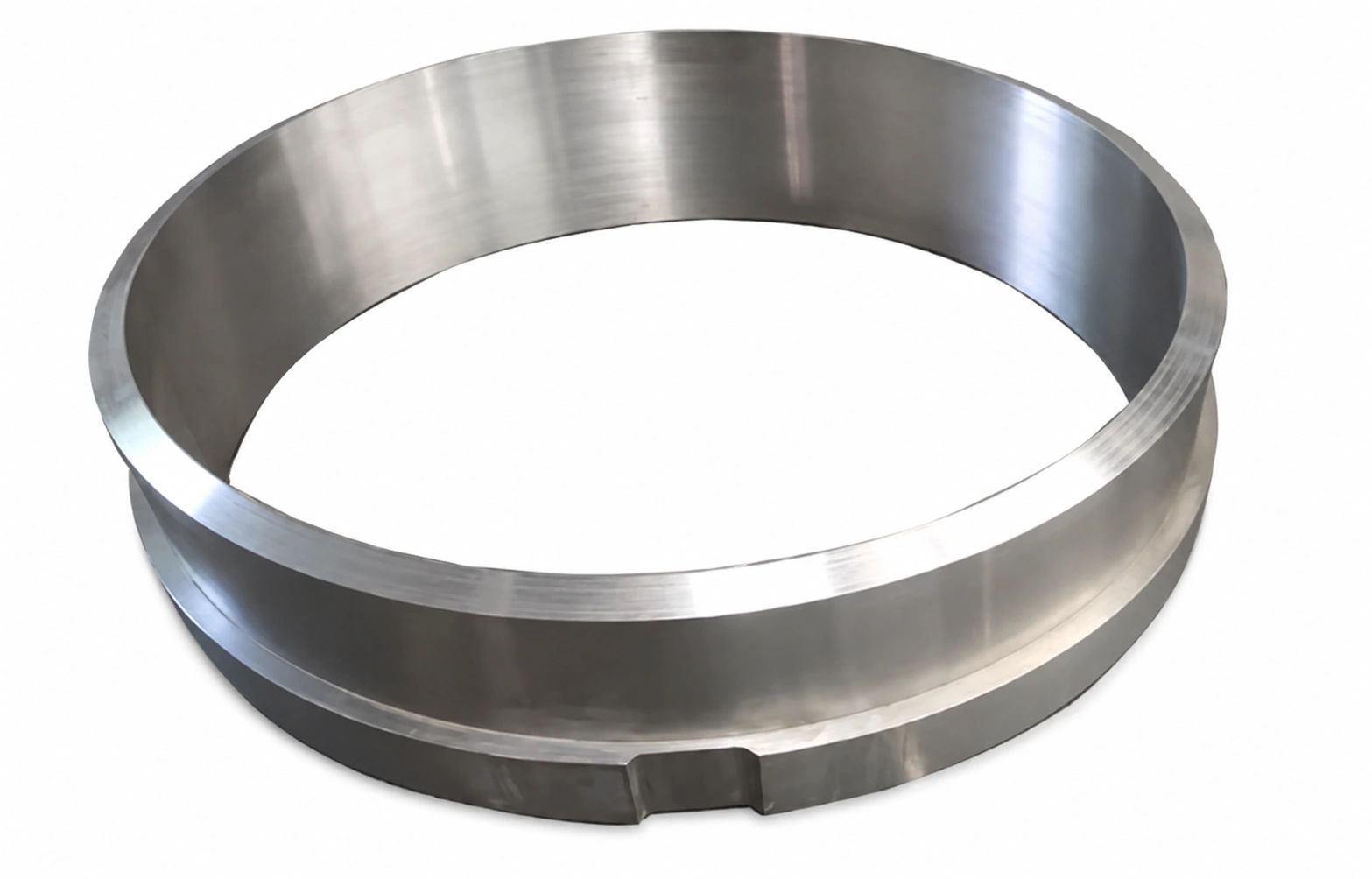
Forged Inconel 718 rings and high-performance industrial components

Inconel 718 Forging: High-Strength Aerospace & Energy Components

Inconel 718 forging is the process of shaping nickel-chromium superalloys under extreme heat and pressure to optimize grain flow and structural integrity for high-temperature environments. Common applications include turbine disks, compressor blades, rocket engine thrust chambers, downhole tool shafts, and high-pressure valve bodies.

Inconel 718 Forging: High-Strength Aerospace & Energy Components

Precision forged Inconel 718 (UNS N07718) for high-strength aerospace, power-generation, and other demanding applications. Inconel 718 is used across cryogenic and elevated-temperature service, with published material data extending to approximately 1,300°F (704°C). Actual allowable service temperature depends on product form, heat treatment, loading, environment, and the governing specification. ForceBeyond supports these projects with AS9100-based quality-system oversight across its manufacturing network.

As a core pillar of our comprehensive Superalloy Forging Services, ForceBeyond specializes in the precision manufacturing of Inconel 718 (UNS N07718) components. Engineered for mission-critical environments, our forged 718 provides a superior structural alternative to cast parts, supporting applications where a wrought structure, high mechanical strength, and fatigue performance are important. Final properties and service limits depend on product form, heat treatment, section size, loading, environment, and the governing specification.

Leveraging our Tier-1.5 “Tri-Regional” model, we provide US-based engineering oversight with high-capacity production across our USA, South Korea, and Taiwan manufacturing network, supporting coordinated engineering, production, inspection, and supply-chain resilience.

Inconel 718 Precision Forged Component

The Tier-1.5 Forging Advantage: From Billet to Finished Part

Traditional supply chains are fragmented, forcing you to manage separate forge and machine shops. ForceBeyond’s Tier-1.5 model integrates Inconel 718 Forging with our precision Inconel 718 Machining centers.

By taking total ownership of the metallurgical lifecycle, we ensure:

  • Controlled Grain Flow: Optimizing the forging process to align grain flow with the part’s primary stress axes.
  • Reduced Buy-to-Fly Ratio: Near-net-shape forging techniques that minimize raw material waste and machining cycle times.
  • Single-Source Traceability: Full heat-lot documentation from the initial melt through forging, heat treatment, and final NDT.

While our forging process optimizes grain flow for high-stress rotating components, parts with extremely complex internal cooling channels or non-symmetrical housings may be better suited for our Inconel 718 Casting solutions using appropriately controlled melting and casting routes.

Why Forged Inconel 718?

Inconel 718 is a precipitation-hardenable nickel-chromium alloy. While casting can be advantageous for geometrically complex components, forging is often preferred for highly loaded rotating, pressure-containing, or fatigue-critical components where a wrought grain structure and controlled grain flow are important design considerations. The required manufacturing route ultimately depends on the drawing, service conditions, and governing specification. A properly controlled forging process can break down the initial cast structure, develop a wrought microstructure, and establish material flow appropriate to the component geometry. These factors can support fatigue-critical applications, but final fatigue performance depends on material condition, heat treatment, defects, surface condition, geometry, residual stress, and service environment.

The Mechanical Advantage

  • High Strength: Precipitation-hardened Inconel 718 can provide high room-temperature tensile and yield strength while maintaining useful mechanical performance at elevated temperatures. Actual allowable properties depend on product form, section size, heat treatment, and the governing specification.
  • Creep Resistance: Optimized for long-term stability under high-stress thermal loads.
  • Workability: Excellent weldability and cryogenic properties compared to other nickel superalloys.


Technical Specifications & Standards

We forge Inconel 718 to the applicable material specifications, drawings, qualification plans, and customer requirements for integration into aerospace and energy supply chains.

Industry Standards Compliance

  • Aerospace: AMS 5662 (solution heat-treated, precipitation-hardenable condition), AMS 5663 (solution and precipitation heat-treated condition)
  • Oil & Gas: NACE MR0175 / ISO 15156
  • General: ASTM B637, UNS N07718
Mechanical Properties (Forged & Aged)
Property Metric Imperial
Tensile strength 1,275 MPa 185 ksi
Yield strength 1,035 MPa 150 ksi
Elongation 12%–15% 12%–15%
Reduction of area 15%–20% 15%–20%
Typical hardness 36–44 HRC 36–44 HRC
Density 8.19 g/cm³ 0.296 lb/in³

Specialized Forging Processes for 718

  • Closed-Die Forging: For high-precision, near-net-shape turbine disks and compressor blades.
  • Seamless Rolled Rings: Ideal for engine casings and structural rings up to 3,500mm OD.
  • Open-Die Forging: Cost-effective for shafts, custom blocks, and prototypes up to 5,000kg.

Quality Assurance & NDT Protocol

Inconel 718 forgings are inspected according to the applicable drawing, material specification, NDT requirements, and customer acceptance criteria. Available inspection methods can include:

  • Ultrasonic Testing (UT): Performed to AMS 2154 standards to identify internal inclusions or porosity.
  • Fluorescent Penetrant Inspection (FPI): For surface crack detection in complex geometries.
  • Macro-Etch Testing: To verify the integrity and directionality of the forged grain flow.
  • Mechanical Verification: Tensile and creep testing on witness coupons from every heat lot.

FAQ: Sourcing Inconel 718 Forgings

What should I look for when choosing an Inconel 718 forging supplier?

When evaluating an Inconel 718 forging supplier, review its experience with UNS N07718, supported forging processes, applicable material specifications such as AMS 5662 and AMS 5663, heat-treatment control, NDT capability, heat-lot traceability, machining support, and ability to manufacture the required geometry and section size. For aerospace, power-generation, and other critical components, the supplier should also be able to review the drawing, inspection requirements, material condition, and documentation package before production.

What Inconel 718 forging processes does ForceBeyond offer?

ForceBeyond supports open-die forging, closed-die forging, and seamless rolled-ring forging for Inconel 718. Open-die forging is commonly considered for shafts, blocks, large preforms, and lower-volume components; closed-die forging can produce repeatable near-net-shape parts; and rolled-ring forging is used for rings, casings, flanges, and other annular components. Final process selection depends on geometry, section size, quantity, grain-flow objectives, machining allowance, and inspection requirements.

Can ForceBeyond manufacture AMS 5662 and AMS 5663 Inconel 718 forgings?

ForceBeyond supports Inconel 718 forging projects that reference AMS 5662 and AMS 5663. AMS 5662 generally applies to material supplied in a solution heat-treated, precipitation-hardenable condition, while AMS 5663 applies to material supplied in a solution and precipitation heat-treated condition. The exact specification, revision, material condition, mechanical-property requirements, and acceptance criteria must be defined by the engineering drawing or purchase order.

When should an Inconel 718 component be forged instead of cast?

Forging is often preferred for Inconel 718 components that benefit from a wrought grain structure, controlled material flow, high fatigue performance, or high mechanical loading. Casting can be more appropriate for parts with complex internal passages, thin walls, or geometries that are difficult to produce efficiently through forging. The manufacturing route should be selected from the drawing, loading conditions, geometry, quantity, inspection requirements, and governing material specification.

What information should I send for an Inconel 718 forging RFQ?

For an efficient Inconel 718 forging review, provide the part drawing or 3D model, required alloy and material specification, material condition, dimensions, annual or batch quantity, machining requirements, heat-treatment requirements, NDT and inspection criteria, certification requirements, and requested delivery schedule. Identifying critical features and service conditions can also help the engineering team determine the appropriate forging route and manufacturing plan.

Request an Inconel 718 Technical Consultation

Direct access to our Delaware-based engineering team. Feasibility reviews delivered within 48 hours.

Our Internal Resources for Die Casting, Investment casting, Forging and Sand Casting

Our Internal Resources for Die Casting, Investment casting, Forging and Sand Casting

Explore related ForceBeyond material, process, quality, industry, and manufacturing resources.